WHO Monographs
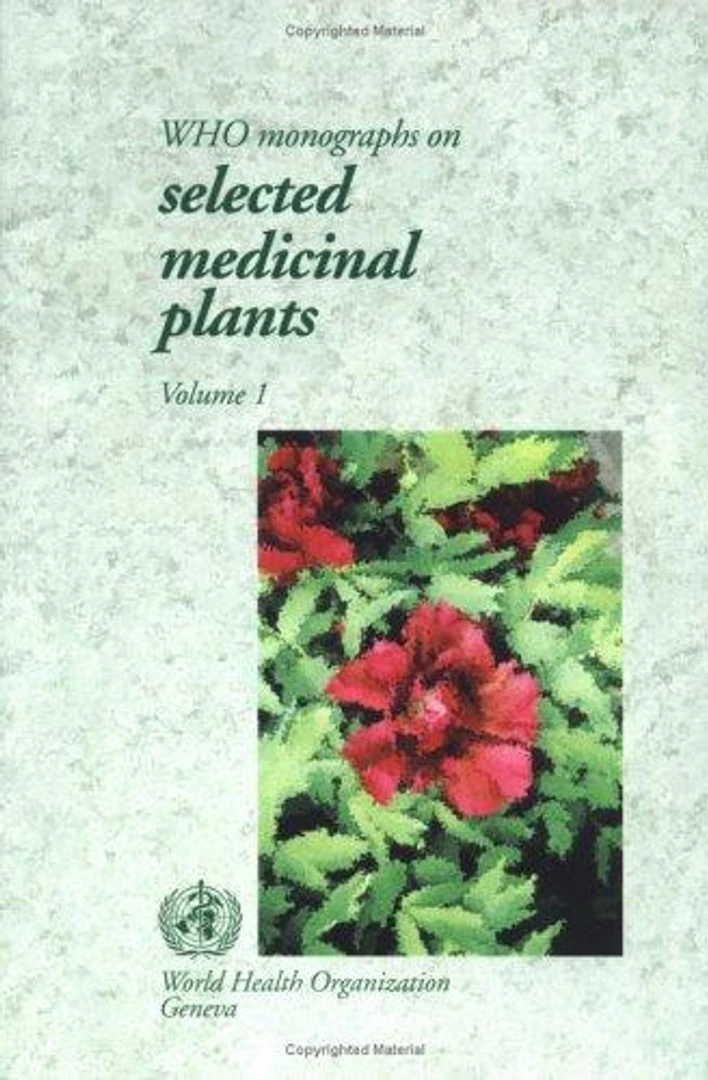
In 1996, following a meeting, the World Health Organization (WHO) decided to prepare monographs on selected medicinal plants. The first monograph book was published in 1999, containing detailed monographs of 28 herbal drugs. The second volume was published in 2002 and included 30 monographs. The third volume (2007) contained 31 monographs, and the fourth volume, published in 2009, included 28 monographs.
WHO monographs provide information on the following aspects of plants and herbal drugs: description, synonyms, local names, botanical characteristics, organoleptic properties, macroscopic and microscopic features of whole and powdered drugs, geographic distribution of the species, general identification tests, purity tests, major chemical constituents, dosage forms, registered and traditional uses, pharmacology, clinical pharmacology, contraindications, warnings, precautions, adverse effects, posology, and references.
Here are the links to the WHO monographs:
Vol. 1 (1999): http://whqlibdoc.who.int/publications/1999/9241545178.pdf
Vol. 2 (2002): http://whqlibdoc.who.int/publications/2002/9241545372.pdf
Vol. 3 (2007): http://apps.who.int/medicinedocs/index/assoc/s14213e/s14213e.pdf
Vol. 4 (2009): http://www.who.int/medicines/areas/traditional/SelectMonoVol4.pdf
With the increasing interest in herbal medicines, the WHO recognized the need to establish new criteria for the most commonly used medicinal plants in modern herbal production. Consequently, they updated the monographs of 17 previously published plants and added 13 new plant monographs. This new monograph book was published in 2010 under the title WHO Monographs on Medicinal Plants Commonly Used in the Newly Independent States (NIS). You can access it at the following link:
http://apps.who.int/medicinedocs/documents/s17534en/s17534en.pdf
This blog post was first published on Tuesday, December 27, 2011, on Nilüfer Orhan’s blog page: https://kognozi.blogspot.com/ (in Turkish).